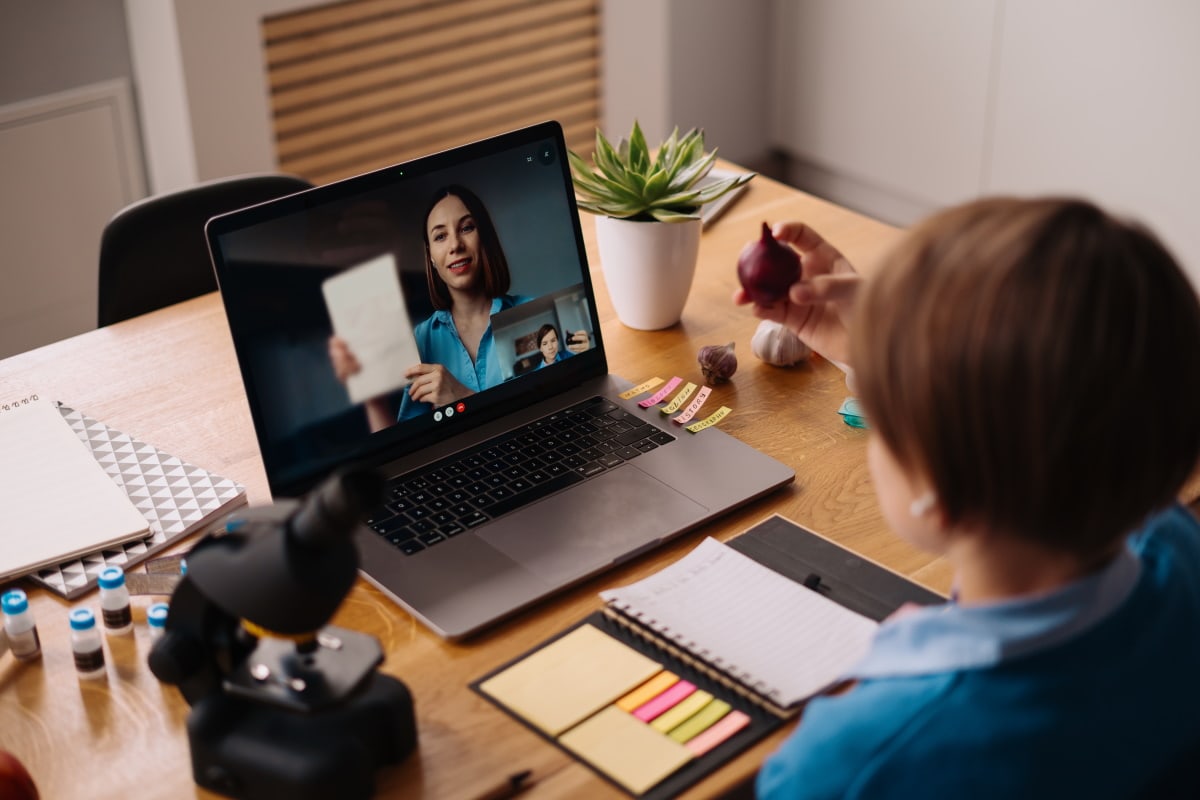
Education is essential for children since it molds their future views and principles. The COVID-19 epidemic kept many people at home, but there are a lot of other potential difficulties that may arise, such as natural catastrophes, financial issues (like the bank holiday travel chaos) family troubles, and so forth. Vaccinations and the slowing of the pandemic have allowed individuals to return to their regular lives without fear of contracting the disease. The importance of blended learning has grown in schools due to the need of a timetable to alternate pupils for safe distance. This way of learning was already in existence before to the epidemic, but its use skyrocketed after it. Using both academic research and the author’s own experiences, this article will explain blended learning and help you make sense of it.
Background
Blended learning refers to students’ use of online and off-campus learning environments to acquire new knowledge and refine their problem-solving abilities in higher education. Higher education has always relied heavily on classroom technology. Blended learning is being used more and more as the norm since it engages pupils. When compared to e-learning, blended learning seems to be more effective. When educators show interest in their students’ self-perceptions of academic achievement, the scope of this action research expands. Because a student’s mentality about a learning technique affects their job, attitude toward their career, and class learning, it is vital to grasp this mindset in order to succeed. Preparing students for an uncertain future is everyone’s duty, including society at large. Students in a blended course may work on class projects and discussions in small groups while also doing independent study at home with the help of resources like video lectures, reading lists, and presentation software. The word “blended learning” may have a variety of interpretations, giving teachers a lot of room to maneuver when developing individualized lesson plans for their pupils. “An instructor’s understanding of the term blended learning is normally used as the basis for course design,” as per studies. Teachers have varying degrees of flexibility when it comes to how much time kids spend in traditional classroom settings and online. Teachers use a wide range of strategies when assigning work. Some follow the conventional wisdom and teach their pupils the same things, whether that’s in a traditional classroom setting or online. Some people like the progressive student-on-learner center model because it puts students in charge of their own education.
So, how exactly are they being implemented in classrooms?
While there is a dearth of studies examining the optimal techniques of combining online and in-person training, blended learning (BL) courses may be improved by investigating how traditional learning approaches might be modified. Considering the pros and downsides of each design is essential when deciding how to combine them. The use of comparisons as a pedagogical technique is one that schools are always exploring. Mark Stevens’s articles highlight the importance of space in integrated learning. This researcher was an early adopter of blended learning in his district, and he was surprised by his students’ reverence for the space they used. “My classroom is a place where my students and I inhabit emotional, physical, and technologically mediated virtual spaces,” While he acknowledges the importance of integrated learning environment tasks and activities, he places a much more value on his students’ physical locations. “However,” points out, “we also inhabit historical spaces of social significance, as well as places of institutional and personal histories.” “In my ongoing efforts to build and sustain productive learning spaces, I have seen how learners are naturally innovative creators and users of spaces, both online and off,” he said. Deliberate design and knowledge of the many kinds and uses of locations in the environment are also encouraged, as is a thorough evaluation of the curricular components of blended learning. Imagine how bad things were when the epidemic blocked all roads. There seemed to be a standstill in education, prompting the establishment of extensive online programs to try to fix the problem. Could this be proof that blended learning outshines more conventional forms of education? This hybrid action research project will include the findings of the Curry Samara Framework for Student Choice, developed by Jim Curry and John Samara, into its methodology. Students will build projects and assignments using this framework in a way that is relevant to their learning goals and standards. For tier-based assignments, teachers utilize the Curry Samara Unit Model, which was created by Jim Samara and John Curry and is based on Bloom’s Taxonomy. Content, technique, and result are the three pillars upon which the Curry-Samara Model rests. The components are standardized, distinct, and integrated. Whether at a computer, a conference, or any other event, anyone may utilize this way to produce anything. Any classroom, whether in a five-star hotel or someone’s living room, has the same goal: to have productive students. But the issues with technology and the environment must be addressed.
To Conclude,
Learning from home is a real boon for those who can’t afford the typical four-year university program. This may make school more accessible and give students time to gain confidence, as not everyone does well in unfamiliar settings. Even the most venerable methods of education may be improved upon by the most brilliant brains on the planet. Find colleges that provide this option, and you may study whenever it’s convenient for you. I hope this essay answered all of your questions about blended learning.